The Nest’s Pit
Nahir Baranovitz
Curator: Tsibi Geva
12.2.2026-14.3.2026
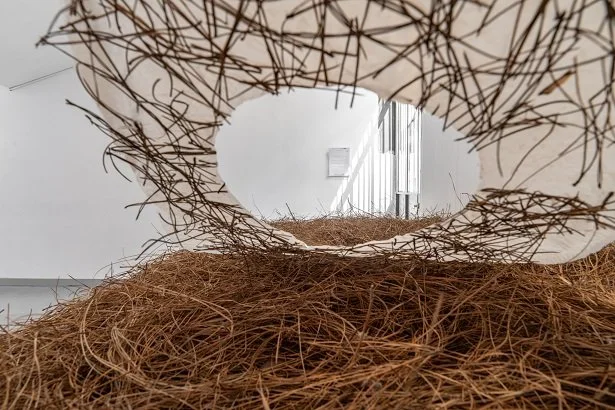
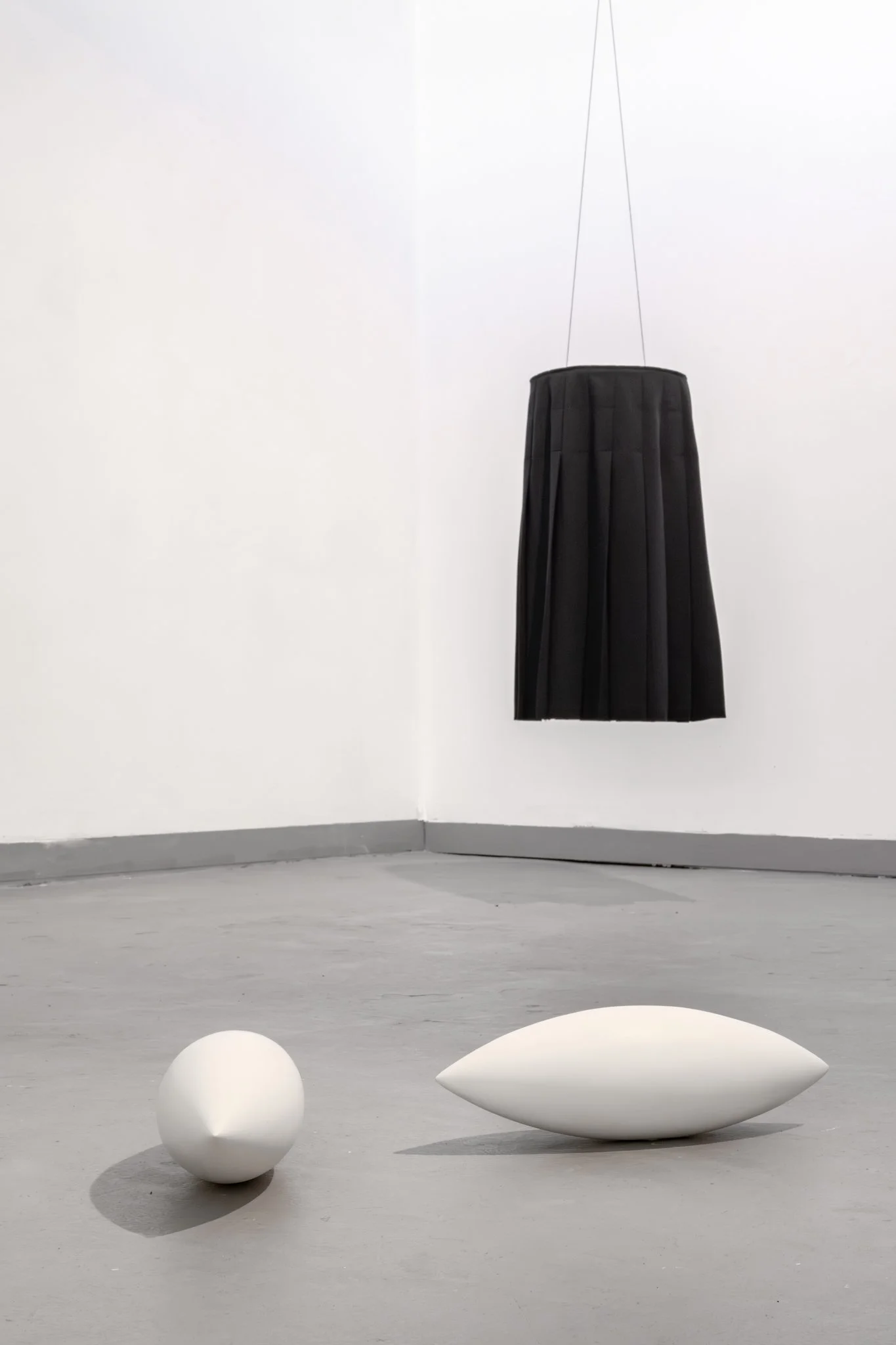
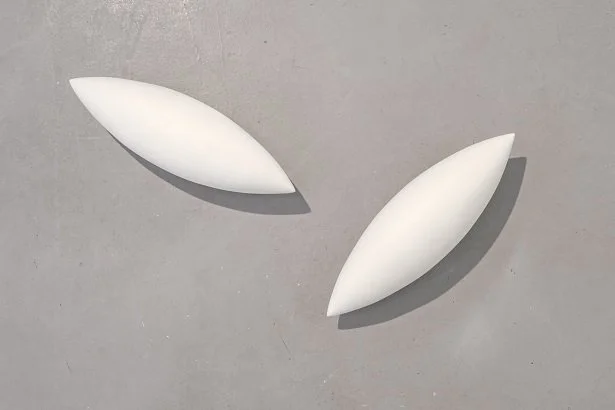
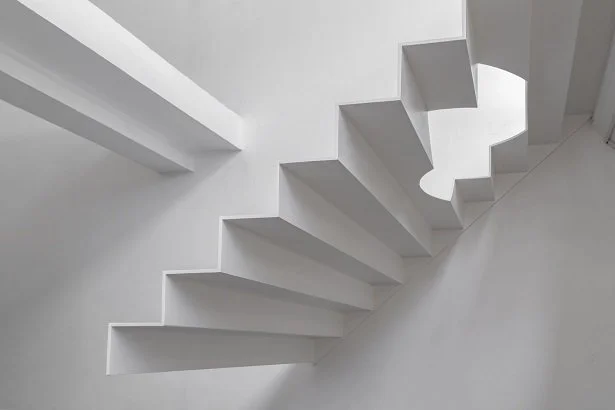
From the edge of the nest falling
The nest’s pit
No ground
Nest-ground
Nahir Baranovitz
Nahir Baranovitz’s exhibition, and the process of working on it, unfolds like an inner conversation, a state of mind, trembling contour lines that echo one another, trying to form a stable outline for a thought. Perhaps it is like trying to grasp the wind, or a movement of thought: ‘What does it all want to become?’
How will things coagulate, crystallize, within this journey in which you never step into the same river twice?
Baranovitz did just that. She shaped her fantasies, tried to give them form, to solidify what cannot be affixed — this mobile, shifting thing, the movement of the wind.
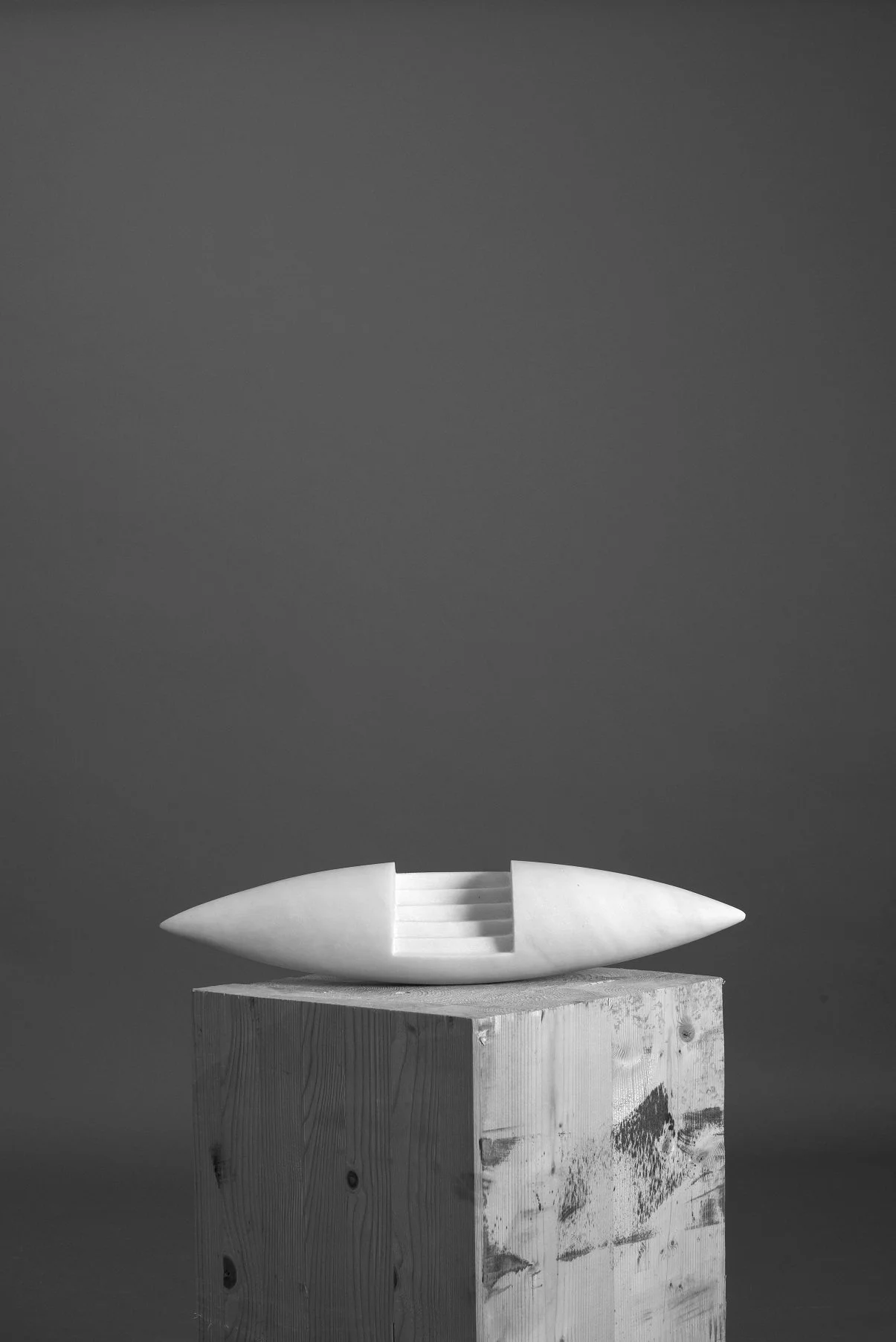
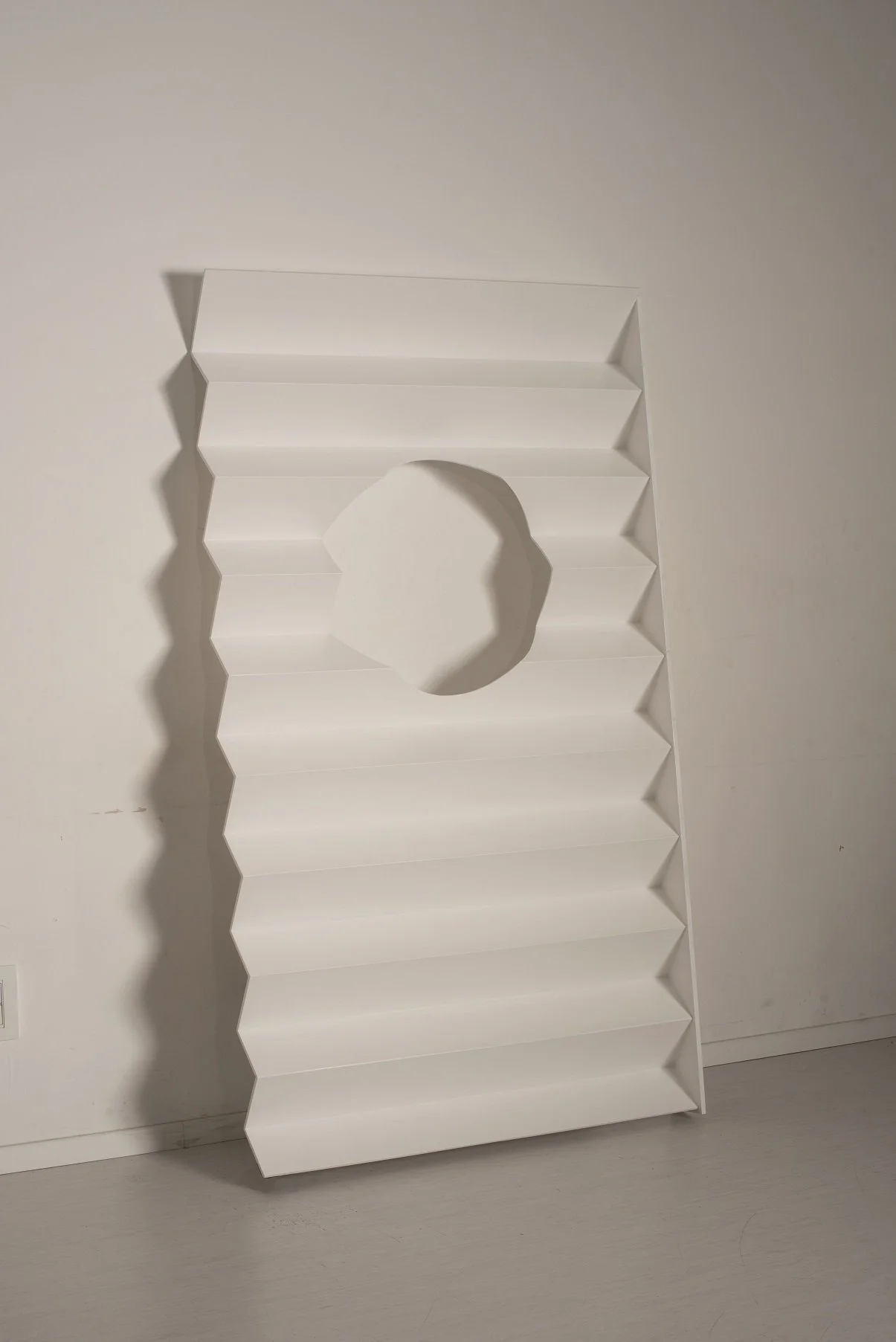
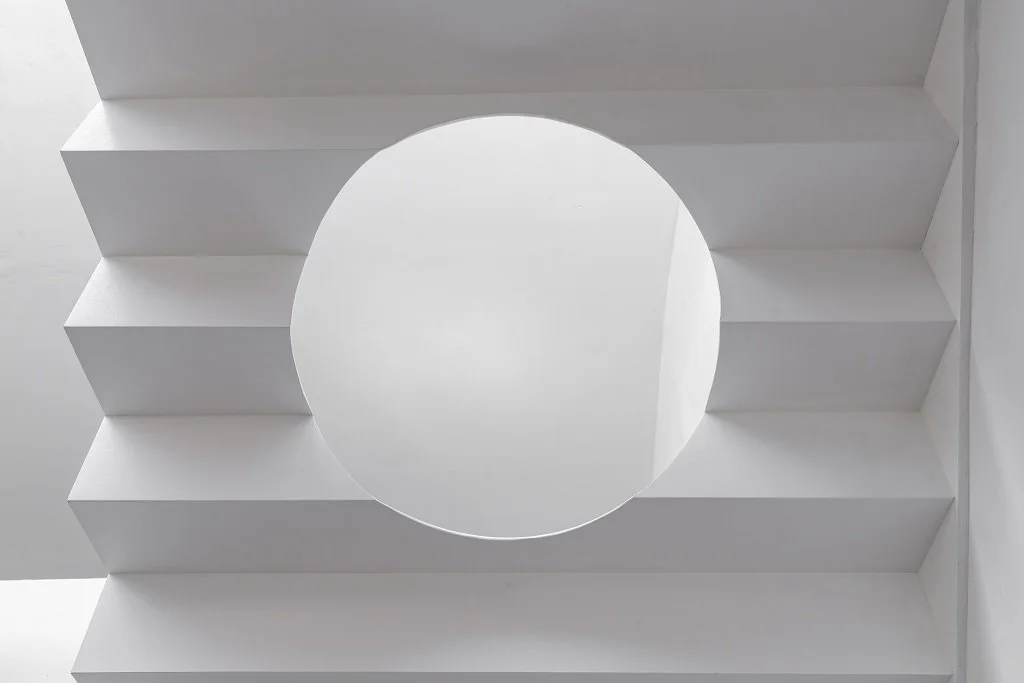
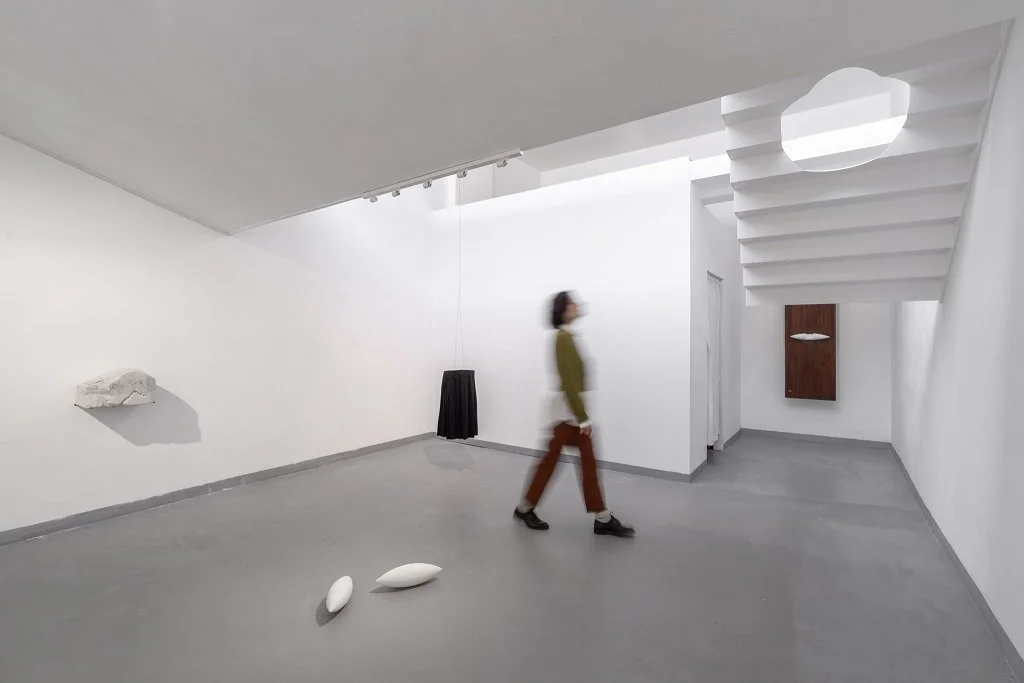
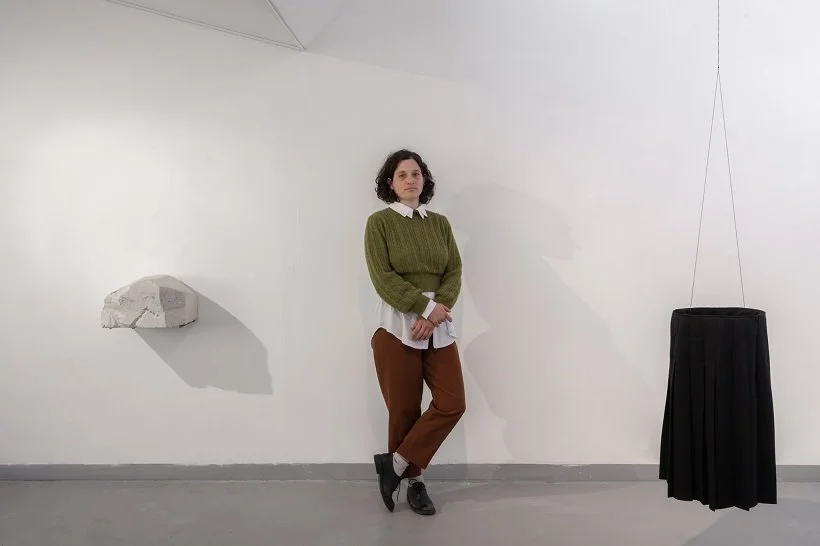
Sketches matured into objects, sculptures, or structures that transform the gallery space, respond to it, climb its walls. A staircase that, like Jacob’s ladder, floats upward toward the window or the sky beyond as it shifts from gray to blue. They do not lead anywhere, like an impression of yearning, a sculptural‑architectural expression, a secular pilgrimage of the spirit’s aspiration toward the sublime, always up there beyond our reach, perhaps analogous to the expression: ‘beyond my strength’.
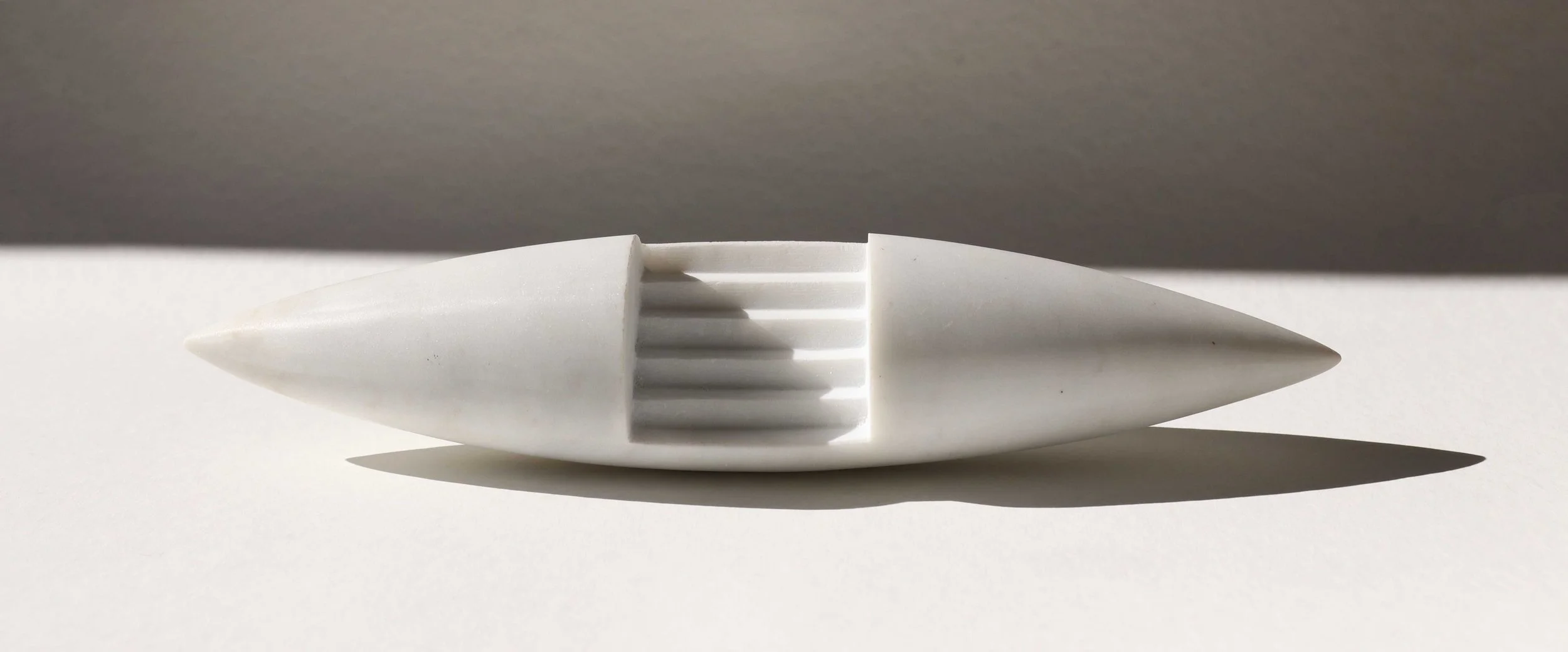
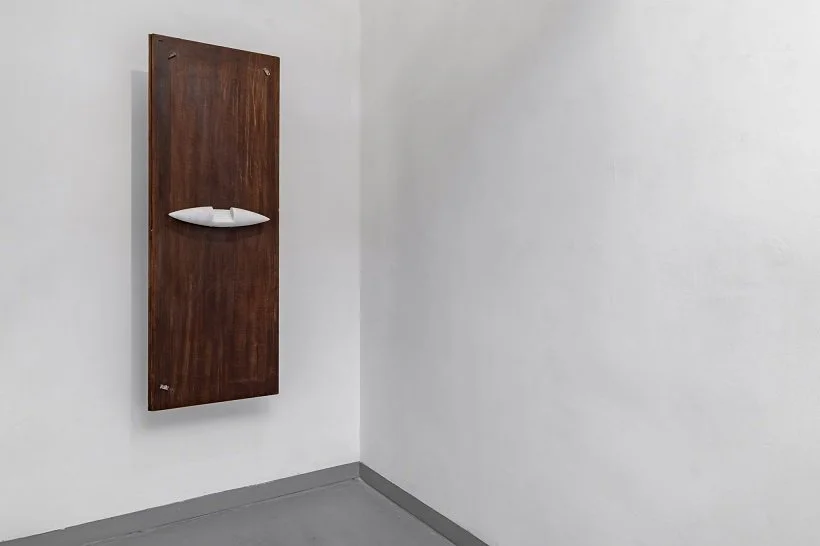
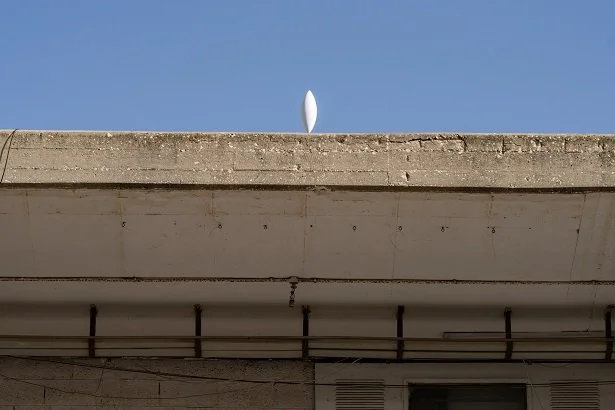
And the smooth, elliptical bodies, echoing Brancusi’s essential forms or his almost‑abstract birds — aerodynamic, enigmatic bodies, a scattering of pebble‑like shapes polished by water in endless motion, completion enclosing a secret, not placed before us to be deciphered. Perhaps they are like enigmas, eluding verbal naming. Other elements are arranged in the space, and they too do not seek to be interpreted in words and do not ask for explanation.
These are things that encompass their own purpose.
Baranovitz writes, and I wish to leave room for her own words, which paraphrase words of surrealist poet and painter Henri Michaux: ‘I write in order to wander within myself.’
Her fragments contemplate the completed, compelling project we encounter.
Tsibi Geva
*
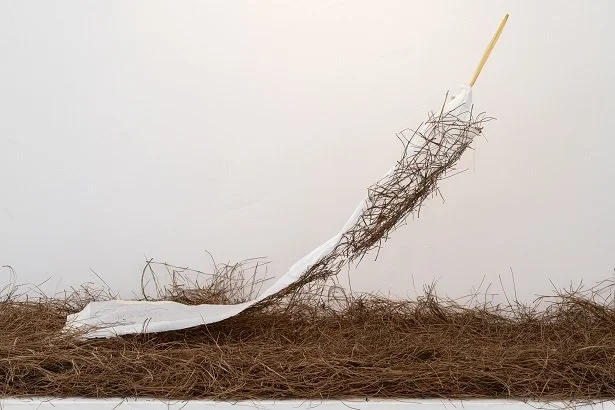
The swallow builds its nest between the wall and the ceiling, as though the ceiling were ground for the nest.
Flight shapes its sense of orientation. What is ground for a bird? After all, it cannot simply drop. If it were to fall, it would fly.
There is a phenomenon of ‘suicidal birds’ that from the edge of a building ‘petrify’ and drop downward in movement uncharacteristic of them. But this phenomenon is considered rare.
Flight is a learned, cultural skill. Birds hatch in a nest, and they learn to fly from it through observation and imitation. Naturally, only a fledgling can fall – before it has learned to fly.
Is there such a thing as an overgrown fledgling, an adult bird that does not know how to fly?
The answer is no, because it would not survive. Natural selection ensures that such a phenomenon could not occur.
A bird in flight is one with itself, one with the world. When a bird falls, it falls out of its birdness. Nature gathers all fledglings that failed to learn how to fly, enclosing them in death-nests.
We imagined that we were birds, that we were one, a human‑bird. We imagined and chirped. We believed that things have wings. We exalted them even as we fell into the nest of language, feathers plucked. The fall, which came before a chirp was heard, was concealed in the tangle of the nest.
And that is almost safety.
Nahir Baranovitz